Choosing a home coffee maker is rarely as simple as it sounds. Walk into any appliance aisle, or scroll through a few product pages online, and you’ll run into drip machines, pod systems, espresso setups, and hybrid models that claim to do a bit of everything. The Ninja CM401 Specialty Coffee Maker falls into that last category — it’s built around the idea that most coffee drinkers don’t want just one type of drink in the morning. Some days call for a straightforward mug of drip coffee. Other days call for something closer to what you’d order at a café counter.
This article walks through what the Ninja CM401 actually offers, how people commonly use machines like this one, who tends to get the most value out of it, and a few practical points worth thinking about before adding it to your kitchen. The goal here isn’t to tell you it’s the right choice — that depends on your habits and preferences — but to give you a clear, balanced picture so you can decide for yourself.
A Quick Overview of the Ninja CM401
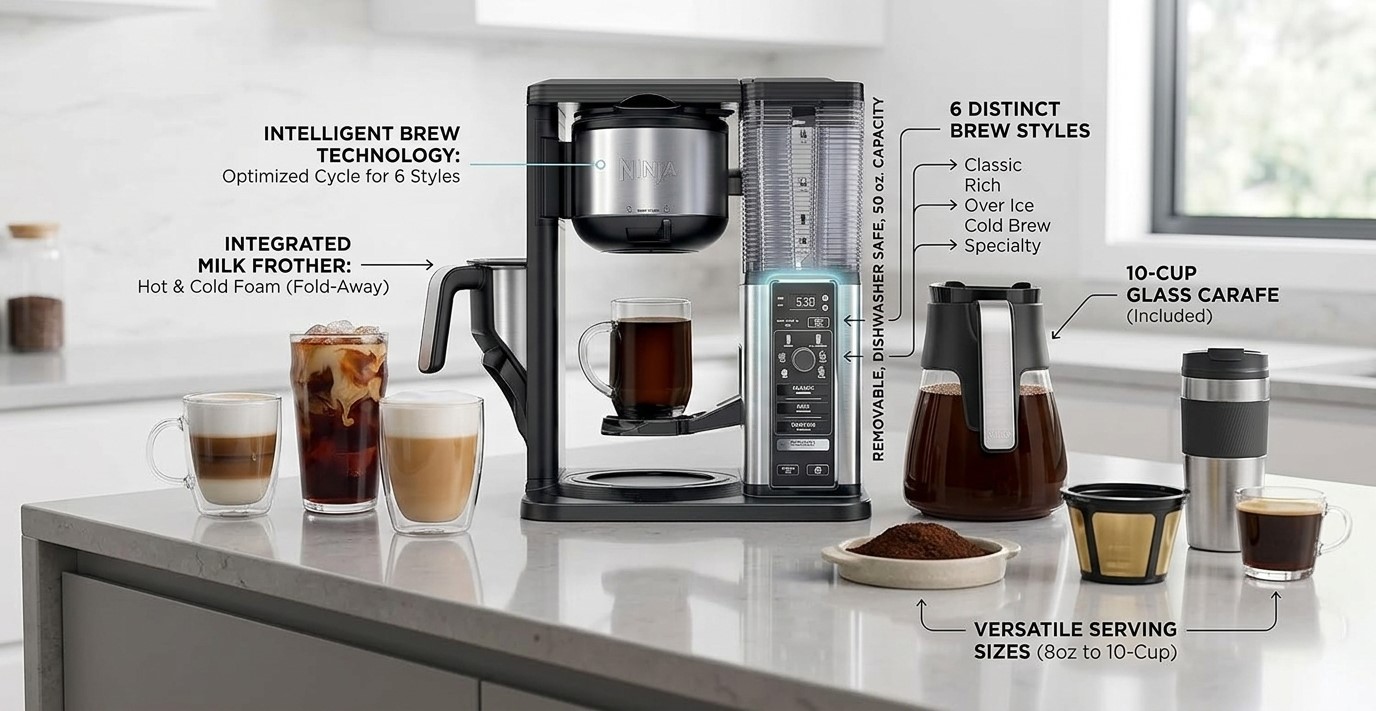
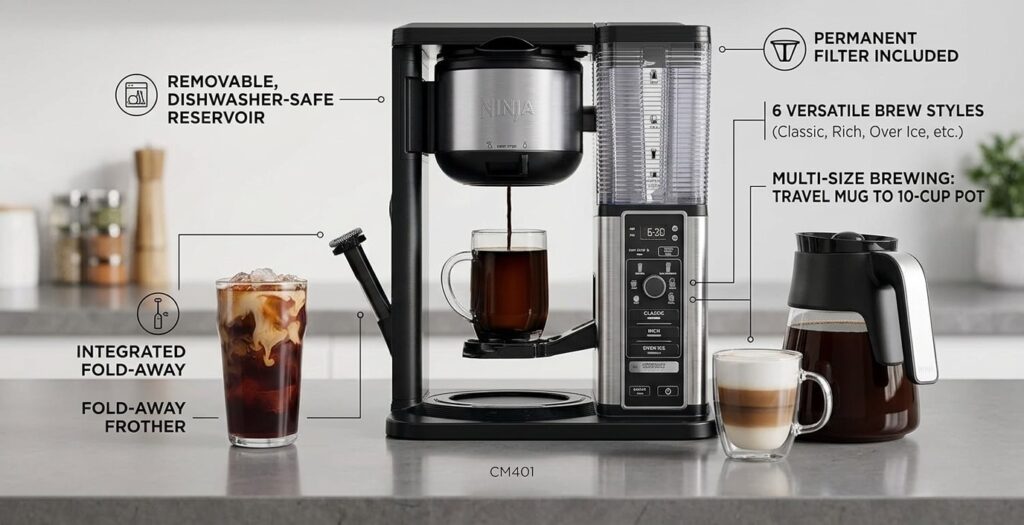
The CM401 is a countertop drip coffee maker built around a 10-cup (50-ounce) glass carafe, paired with a fold-away milk frother, a removable water reservoir, and a permanent mesh filter. It’s designed for ground coffee rather than capsules or pods, and it includes several brew styles and brew sizes so the same machine can produce anything from a single travel mug to a full pot.
Rather than functioning as a single-purpose drip machine, it’s positioned as a multi-style brewer — something that can handle a basic morning pot of coffee, a concentrated brew for lattes, and an iced coffee setting, all from one unit. That versatility is really the core idea behind the design, so it’s worth breaking down each part of the system in more detail.
Key Features
Multiple Brew Styles
The CM401 offers four distinct brew styles: Classic, Rich, Over Ice, and Specialty. Classic is intended for a standard, everyday cup of drip coffee. Rich produces a fuller-bodied cup using the same amount of grounds, which some people prefer for a stronger-tasting brew without adjusting their coffee-to-water ratio. Over Ice is designed specifically for cold coffee — it brews at a higher temperature so that once the coffee hits a cup of ice, it doesn’t come out watered down the way a standard hot brew poured over ice often does. Specialty Brew is the one aimed at espresso-style drinks: it produces a concentrated coffee that can be combined with frothed milk to build lattes, macchiatos, and cappuccino-style drinks at home.
It’s worth noting that “Specialty Brew” is a concentrate made from drip-brewed coffee, not a true espresso shot pulled under high pressure. The distinction matters if you’re comparing it to a dedicated espresso machine, which is addressed further down in this article.
Six Brew Sizes
Beyond the four brew styles, the machine offers six brew sizes: Cup, XL Cup, Travel Mug, Multi-Serve Travel Mug, Half Carafe, and Full Carafe. This range is one of the more practical aspects of the design, since it means the machine can be used by one person making a single travel mug on a weekday morning, or by a household brewing a full carafe for guests on the weekend. The brew sizing also adjusts brew time and strength accordingly, rather than just diluting a fixed amount of coffee into a bigger vessel.
Fold-Away Frother
The built-in frother sits on the side of the machine and folds down out of the way when it isn’t needed, which helps keep the footprint manageable on a counter. It’s designed to whisk hot or cold milk — including dairy and non-dairy alternatives like oat or almond milk — into a smoother, more textured froth for topping specialty drinks. It’s important to understand what the frother does and doesn’t do: it froths milk that has already been heated or is at room temperature or cold; it doesn’t heat milk on its own. If you want hot frothed milk for a latte, the milk needs to be warmed separately before frothing. The frother whisk is removable, which makes it easier to clean after use.
Permanent Filter With Paper Filter Compatibility
The CM401 comes with a permanent mesh filter, so daily use doesn’t require buying and restocking paper filters. For anyone who prefers paper filtration — for taste preference or easier cleanup — the machine can accommodate a standard basket-style paper filter as well. One thing worth flagging clearly: using a paper filter together with the permanent filter at the same time isn’t recommended, since it can lead to clogging or backup in the brew basket. It’s one or the other, not both simultaneously.
Removable, Dishwasher-Safe Water Reservoir
The 40-ounce water reservoir lifts out of the machine, which makes refilling more convenient since you can carry it to the sink rather than pouring water into a fixed tank on the counter. It’s also dishwasher safe, along with several other components — the carafe, the brew-through lid, the permanent filter, the removable filter holder, the flip-top lid, the frother whisk, and the included scoop. That’s a fairly wide range of dishwasher-safe parts for a drip coffee maker, which can cut down on hand-washing at the end of a brewing session.
Automatic Shutoff and Clean Indicator
After an hour without activity, the machine powers off automatically, which is a small but useful safety and energy-saving feature for anyone who tends to forget appliances are running. There’s also a clean or descale indicator light that turns on when mineral buildup from water is likely affecting brew performance, prompting a descaling cycle using a standard descaling solution.
No Pods Required
Everything runs on ground coffee rather than proprietary pods or capsules. That means no ongoing cost or environmental consideration tied to single-use pods, and the flexibility to use whatever coffee grounds you already prefer — flavored, single-origin, decaf, or otherwise — without being locked into one brand’s pod ecosystem.
How It Can Be Used
A machine with this many brew styles and sizes tends to fit into daily routines in a few different ways, depending on the household.
Everyday morning coffee. For a single cup or travel mug, the Classic or Rich brew style covers the basic use case most people reach for first thing in the morning — quick, no extra steps, no need to think about frothing or concentrate.
Entertaining or larger households. When more people need coffee at once, the Half Carafe or Full Carafe size handles that without requiring multiple brew cycles. This is useful for weekend mornings, family visits, or simply households where more than one person drinks coffee around the same time.
Iced coffee season. Rather than brewing a hot pot and pouring it over ice — which dilutes the flavor as the ice melts — the Over Ice setting is built to produce a stronger concentration specifically so the final iced drink doesn’t taste watered down. This can be useful for anyone who drinks iced coffee regularly rather than as an occasional treat.
Café-style drinks at home. Using the Specialty Brew setting alongside the fold-away frother, it’s possible to put together lattes, cappuccino-style drinks, and macchiatos without a separate espresso machine. This won’t replicate a professional espresso setup, but it does offer a reasonably close alternative for people who want that style of drink without the cost or learning curve of pulling actual espresso shots.
Batch brewing for the week. Some people use the full carafe setting to brew a larger batch that gets portioned into a thermos or refrigerated for iced coffee throughout the week, which can be a time-saver on busy mornings.
Who It May Be Suitable For
This type of coffee maker tends to appeal to a specific but fairly broad group of coffee drinkers:
- People who want more than one type of coffee drink from a single appliance, rather than owning a separate drip machine and a separate milk frother or espresso setup.
- Households with mixed preferences — for example, one person who drinks black coffee and another who prefers milk-based drinks.
- Anyone who drinks both hot and iced coffee depending on the season and wants one machine that handles both reasonably well.
- People who prefer using their own ground coffee rather than being tied to a pod system, whether for cost, environmental, or flavor variety reasons.
- Those without much counter space for multiple separate appliances (a drip machine, a frother, an ice-coffee-specific brewer), since this consolidates several functions into one unit.
It may be less suited to people specifically looking for true espresso — pulled under pressure through finely ground, tightly packed coffee — since the Specialty Brew setting produces a concentrate rather than espresso in the traditional sense. Similarly, anyone who wants a machine that also grinds whole beans will need to look elsewhere, as this model works with pre-ground coffee only.
Important Things to Consider
A few practical points are worth thinking through before deciding whether this fits your routine:
It doesn’t grind coffee. The CM401 works with ground coffee, not whole beans, so if grinding fresh beans as part of your routine matters to you, you’ll need a separate grinder.
The frother doesn’t heat milk. It froths milk that’s already at the temperature you want. For hot lattes, that usually means warming milk separately (in a microwave or on the stove) before using the frother.
Permanent filter vs. paper filter — not both at once. The permanent filter is convenient for ongoing use, but combining it with a paper filter isn’t recommended, since it can cause clogging. If you switch to paper filters, use them on their own.
Descaling is part of routine maintenance. Like most machines that heat and pass water through an internal system, mineral buildup happens over time, especially with hard water. The clean indicator helps flag when a descaling cycle is due, but it does mean factoring in occasional maintenance rather than treating the machine as fully maintenance-free.
Specialty Brew is a concentrate, not espresso. For anyone comparing this directly to a pump-driven espresso machine, it’s worth setting expectations accordingly. The results are different — drip-based concentrate versus pressure-extracted espresso — and that affects both flavor and crema.
Counter space and carafe size. A 10-cup glass carafe and a machine with a frother attached will take up a moderate footprint on a counter. It’s worth measuring your available space, particularly under cabinets, before deciding where it will live.
Household use only. As with most kitchen appliances of this kind, it’s designed for household rather than commercial use, and standard care should be taken around children and supervision, consistent with general small-appliance safety guidance.
Comparing General Coffee Maker Categories
It can help to step back and look at how a multi-style drip machine like this compares to other common categories of home coffee equipment, without focusing on any specific competing brand or model.
Standard drip coffee makers are typically the simplest option: fill the reservoir, add grounds, and brew a pot. They’re generally inexpensive and easy to use, but most don’t offer built-in frothing or multiple brew styles, so making a latte or iced coffee usually means extra equipment or manual steps.
Single-serve pod machines offer convenience and consistency, since each pod is pre-measured. The trade-off is less flexibility in coffee choice (you’re generally limited to what’s available in pod form for that system) and an ongoing cost per pod, along with the packaging waste that comes with single-use capsules.
Espresso machines — particularly manual or semi-automatic pump models — produce true espresso with crema, and they’re often paired with a separate steam wand for milk. These machines tend to have a steeper learning curve and higher price point, and they usually require finely ground, fresh coffee and more hands-on technique to get consistent results.
Multi-style drip machines with built-in frothing, which is the category the CM401 falls into, sit somewhere in the middle. They aim to cover more use cases from a single unit — everyday coffee, stronger concentrate for milk drinks, and iced coffee — without the cost or complexity of a full espresso setup, though they don’t fully replicate what a dedicated espresso machine produces.
Each category has reasonable trade-offs depending on what matters most to you: simplicity, drink variety, authenticity of espresso, or overall cost. There isn’t a single “correct” choice — it comes down to which trade-offs fit your daily habits.
Frequently Asked Questions
Does the Ninja CM401 grind coffee beans? No. It’s designed to work with pre-ground coffee, not whole beans, so a separate grinder is needed if you prefer grinding fresh.
Can I use paper filters instead of the included permanent filter? Yes, a standard basket-style paper filter can be used. However, it isn’t recommended to use a paper filter together with the permanent filter at the same time, as this can lead to clogging.
How does the Over Ice brew setting work? It brews at a higher temperature and adjusted ratio specifically so the coffee doesn’t taste diluted once it’s poured over a cup of ice, compared to simply chilling a standard hot brew.
Does the frother heat the milk, or only froth it? The fold-away frother only froths — it doesn’t heat. Milk needs to be warmed separately beforehand if you want a hot, frothed result for drinks like lattes.
Is the water reservoir removable for filling? Yes, the 40-ounce reservoir lifts out of the machine, so it can be carried to a sink for filling rather than pouring water directly into a fixed tank.
Which parts are dishwasher safe? The glass carafe, brew-through lid, permanent filter, removable filter holder, water reservoir, flip-top lid, frother whisk, and included scoop are all listed as top-rack dishwasher safe.
Does it have a delay brew or programmable option? It includes a delay brew function, which allows the machine to be set up the night before so coffee is ready at a chosen time.
Is descaling required, and how do I know when? Over time, mineral deposits from water can build up inside the system, which is common with most coffee makers that heat water internally. A clean/descale indicator light alerts you when a descaling cycle is recommended, using a standard descaling solution.
Is the Specialty Brew setting the same as espresso? Not exactly. It produces a concentrated coffee using the drip brewing method, which is different from espresso extracted under pressure. It’s intended to approximate espresso-style drinks for lattes and similar beverages, rather than replicate a true espresso shot.
Final Thoughts
The Ninja CM401 is built around flexibility — one machine that can produce a quick single cup, a full pot for guests, iced coffee that doesn’t taste watered down, and specialty drinks with frothed milk, all without needing pods or separate appliances for each function. That kind of range tends to appeal most to people who don’t drink the exact same coffee order every single day, or to households where different people want different things from the same machine.
At the same time, it’s worth going in with realistic expectations: it doesn’t grind beans, the frother doesn’t heat milk on its own, and the “specialty” brew is a concentrate rather than true pressure-extracted espresso. None of that makes it a poor option — it just helps to know what the machine is designed to do before deciding whether it fits your routine.