Introduction
For a lot of households, the coffee maker sitting on the counter does more quiet, unglamorous work than almost any other kitchen appliance. It’s the first thing turned on in the morning and often the last thing cleaned at night, and yet most people rarely stop to think about what’s actually happening inside the machine while it hums and gurgles its way to a full carafe. The Ninja Fresh Brew Coffee Maker, model CE251, is one of the options available in this everyday category — a 12-cup, stainless steel drip coffee maker built around a glass carafe and a set of programmable features aimed at giving people more control over how their coffee turns out.
This isn’t a single-serve pod machine, and it isn’t an espresso setup either. It sits squarely in the traditional drip coffee maker category, but with a handful of features — like adjustable brew strength, a delay-brew timer, and a small-batch mode — that are meant to make it more flexible than a purely “fill it and press start” appliance. The goal of this article is to walk through what the CE251 actually offers, how it might fit into different routines, and what’s worth thinking about before deciding whether it’s the right kind of coffee maker for a particular kitchen. Nothing here is meant as a definitive verdict; it’s simply an organized look at the information that’s publicly available about this model, laid out in a way that’s hopefully useful for anyone doing their own research.
Key Features
12-Cup Glass Carafe and 60-Ounce Water Reservoir
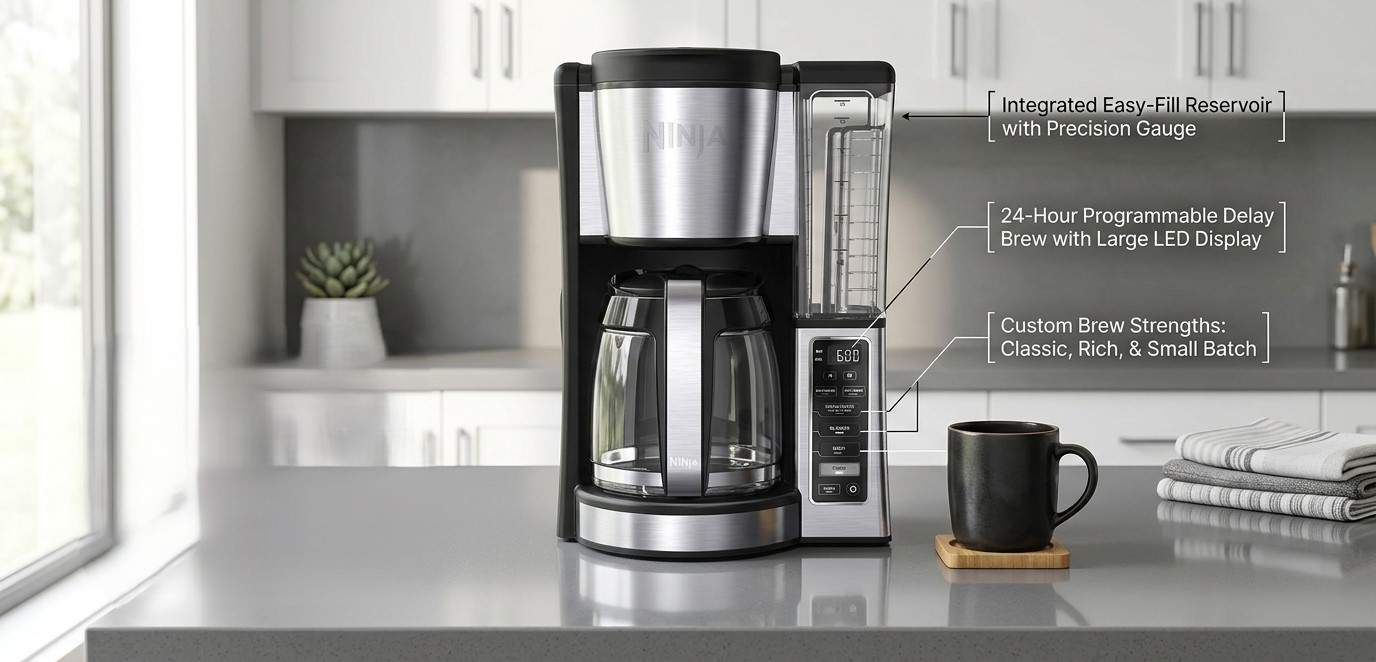
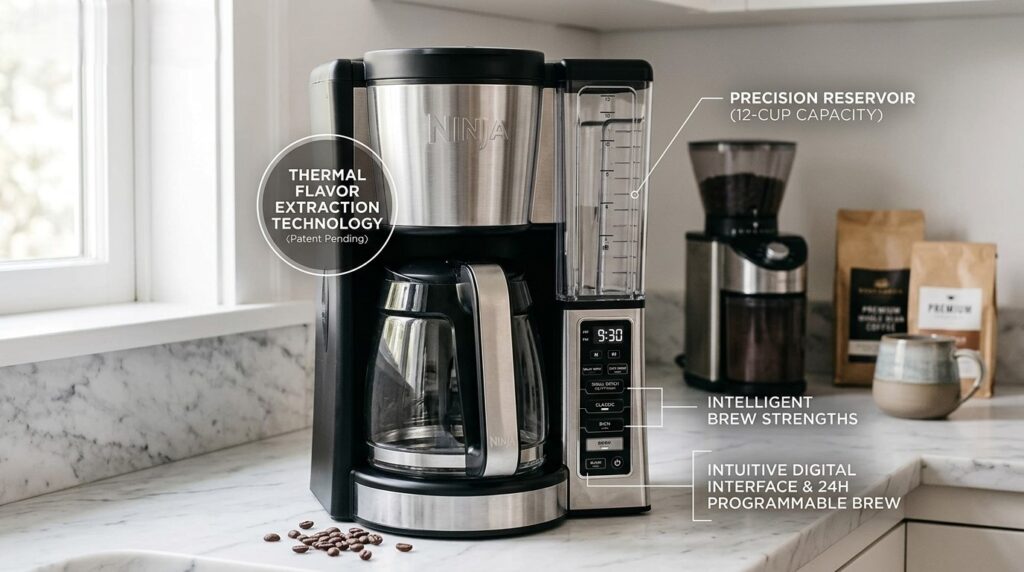
At the center of the CE251 is a 12-cup glass carafe paired with a 60-ounce removable water reservoir. The reservoir lifts out of the machine, which generally makes it easier to fill at the sink rather than trying to pour water carefully into a narrow opening on top of the unit. Because the carafe is glass rather than an insulated thermal design, coffee stays visible at every stage, which can be a small but genuinely convenient thing when you just want to glance over and see how much is left.
Two Brew Strength Settings — Classic and Rich
The machine includes two brew strength options, labeled Classic and Rich. Classic is generally intended to produce a smoother, more balanced cup, while Rich is designed to pull a bit more intensity out of the same amount of grounds. Because taste is subjective and depends heavily on the beans, grind size, and water used, the practical difference between these two settings can vary from one batch to the next — but having the option at all gives users a way to adjust the brew without changing their coffee-to-water ratio manually.
Advanced Boiler for Brewing Temperature
Ninja markets this model with what it calls an “advanced boiler,” a heating system built to bring water to and maintain a brewing temperature associated with more complete flavor extraction. Water temperature is one of the more overlooked variables in home coffee brewing — water that’s too cool tends to under-extract and taste flat or sour, while water that’s too hot can pull out excessive bitterness. A more consistent internal boiler is meant to keep the machine in a narrower, more favorable temperature range throughout the brew cycle.
Small Batch Function (1–4 Cups)
Not every brew needs to fill a full carafe. The CE251 includes a small-batch setting designed for making anywhere from one to four cups without diluting the flavor the way a full-size brew cycle sometimes can when scaled down. This is a genuinely practical feature for single-person households, or for anyone who just wants a cup or two without needing to keep the rest of a pot warm for hours.
24-Hour Programmable Delay Brew
The built-in digital clock and control panel allow the brew cycle to be scheduled up to 24 hours in advance. In practice, this means grounds and water can be loaded the night before, with the machine set to start automatically at a chosen time — so a fresh pot is ready around the time someone wakes up or gets home from work, without needing to be near the machine to start it.
Adjustable Warming Plate
Once brewing finishes, the warming plate underneath the carafe keeps coffee at serving temperature for up to about four hours. This is a fairly standard feature across drip coffee makers, but it’s a meaningful one for shared kitchens, offices, or any household where people don’t all pour their coffee at exactly the same moment.
Pause-and-Serve Function
A pause, or mid-brew interrupt, function lets someone pull the carafe out and pour a cup even before the full brew cycle has finished, then return it to continue brewing without much interruption. It’s a small mechanical detail, but it addresses a genuinely common frustration — not wanting to wait for the very last drop before getting that first cup.
Filter Compatibility
The CE251 is designed to work with a cone-style filter setup and is compatible with standard paper filters, giving the option to use either disposable filters or a reusable filter if the household prefers to cut down on ongoing filter purchases.
Integrated Measuring Scoop
A coffee scoop is stored directly on the unit, which is a minor but genuinely useful detail — it means the scoop isn’t something that needs to be tracked down in a drawer every morning, and it also helps keep the coffee-to-water ratio more consistent from one brew to the next.
Stainless Steel Housing and Compact Footprint
The exterior combines a stainless steel finish with a relatively compact body, which tends to fit more easily under standard kitchen cabinets or on narrower counters compared with larger, feature-heavy coffee systems.
How It Can Be Used
Because the CE251 is a fairly traditional drip coffee maker at its core, most of its use cases will look familiar to anyone who has owned one before — but the added programmability opens up a few more specific routines worth mentioning.
Morning prep the night before. With the 24-hour delay brew, grounds and water can be set up before bed, meaning there’s no need to stumble to the kitchen and fumble with settings first thing in the morning. The machine handles the timing on its own.
Brewing for one, without waste. The small-batch mode is useful for anyone who doesn’t want to make a full 12-cup pot just to drink one mug. This can also help reduce the amount of coffee that ends up sitting on the warming plate for hours and slowly losing its fresh-brewed character.
Serving a household or small office with different preferences. Since brew strength can be adjusted per pot, a shared kitchen can alternate between a milder Classic brew one day and a bolder Rich brew the next, without needing two separate machines.
Entertaining or hosting. A full 12-cup carafe is enough to comfortably serve a small gathering, and the warming plate means coffee doesn’t need to be poured the instant it finishes brewing.
Grabbing a cup mid-brew. For anyone in a hurry, the pause function means the first cup doesn’t have to wait for the entire cycle to complete.
Everyday base for coffee drinks. Brewed coffee from a machine like this can also serve as the starting point for iced coffee (brewed and then chilled), coffee-based desserts, or flavored coffee drinks at home, since it produces a standard pot of drip coffee that can be used however someone likes afterward.
Who It May Be Suitable For
This type of coffee maker tends to fit certain routines and households more naturally than others. It may be a reasonable fit for:
- People who drink coffee daily and want a “set it and forget it” morning routine, thanks to the programmable delay brew.
- Small households or single-person kitchens that don’t always need a full pot, given the small-batch setting.
- Anyone with a smaller kitchen or limited counter space, since the compact stainless steel design takes up less room than larger multi-function coffee systems.
- People who want some flexibility in brew strength without switching to a more manual brewing method like a pour-over.
- Shared households or small offices where a full carafe and a warming plate are genuinely useful for serving multiple people over a couple of hours.
On the other hand, it may be less suited to people specifically looking for espresso, cold brew, or single-serve pod convenience, since this model is built around the traditional drip-brewing method rather than those alternative categories. Someone whose main interest is milk-based drinks like lattes or cappuccinos would also need a separate frother or steaming device, as that isn’t part of what a standard drip machine like this one does.
Important Things to Consider
A few practical points are worth thinking through before deciding on any drip coffee maker, including this one:
Water reservoir capacity versus daily habits. A 60-ounce reservoir is generous for a 12-cup carafe, but anyone brewing multiple pots a day should factor in how often they’re willing to refill it.
Glass carafe care. Glass carafes are easy to see through and generally simple to clean, but they do require a bit more care than an insulated stainless steel carafe — they can crack if dropped or exposed to sudden temperature changes, and they shouldn’t be left empty on a hot warming plate for extended periods.
Regular cleaning and descaling. Like any machine that heats and moves water repeatedly, mineral buildup from tap water can affect performance and taste over time. Periodic descaling, along with regularly washing the carafe, filter basket, and reservoir, is generally recommended to keep the machine performing consistently and to help the coffee taste as intended.
It’s a drip coffee maker, not a multi-beverage system. This model doesn’t grind beans, make espresso, or produce cold brew on its own. Anyone whose coffee routine depends on those specific methods would want to look at a different type of machine entirely, rather than expecting a drip coffee maker to cover that ground.
Brew strength differences depend on the beans. The Classic and Rich settings adjust how the machine brews, but the final flavor still depends heavily on the type of coffee, roast, and grind size used. It’s worth setting expectations accordingly rather than assuming the settings alone will dramatically change the outcome regardless of the beans.
Counter and cabinet clearance. Even with a relatively compact design, it’s worth checking the reservoir’s lid clearance and the space needed to lift the carafe in and out, particularly if the coffee maker will sit under upper cabinets.
Comparing General Coffee Maker Categories
Rather than comparing specific brands, it can be more useful to understand how different categories of home coffee makers generally differ, since that context helps clarify where a machine like the CE251 fits.
Programmable drip coffee makers (the category this model belongs to) are generally designed for brewing multiple cups at once, often with a delay-start timer and a warming plate to keep coffee at temperature afterward. They tend to offer a good balance of convenience and cost-per-cup, especially for households that drink more than one or two cups a day, since brewing in bulk from bagged or bulk coffee grounds is typically less expensive over time than single-serve alternatives.
Single-serve pod machines prioritize speed and simplicity — a pod goes in, a button is pressed, and a cup comes out within a minute or two, with minimal cleanup. The tradeoff is usually a higher cost per cup over time, along with less control over brew strength or bean origin, since users are limited to whatever pods are available.
Manual pour-over methods put the most control in the user’s hands, from water temperature to pour speed to steep time, and many coffee enthusiasts favor them for that reason. The tradeoff is that they require more hands-on time and a bit of a learning curve, and they aren’t well suited to brewing a large batch for multiple people at once.
Espresso machines are built around a completely different brewing method — forcing hot water through finely ground, tightly packed coffee under pressure — and are generally aimed at people who specifically want espresso-based drinks like lattes or cappuccinos. They tend to involve a steeper learning curve and, in many cases, a higher upfront cost than a standard drip machine.
Within this landscape, a machine like the CE251 sits in a fairly middle-of-the-road, practical spot: more automated and lower-maintenance than pour-over, generally more cost-effective per cup than pod machines over time, and simpler to operate day-to-day than an espresso setup — while not attempting to replicate what those other categories are specifically built for.
Frequently Asked Questions
How many cups can the Ninja CE251 brew at once? It’s built around a 12-cup glass carafe, with a 60-ounce removable water reservoir supplying the water for a full brew cycle.
Can I make a smaller amount of coffee without wasting grounds or water? Yes — the small-batch setting is designed for brewing between one and four cups, intended to avoid the diluted taste that can sometimes happen when a full-size brew cycle is scaled down for a smaller amount.
Does the coffee maker need paper filters, or can I use a reusable one? It’s compatible with a cone-style filter setup and works with standard paper filters, and it can also be used with a reusable filter for those who’d prefer not to buy paper filters on an ongoing basis.
Can I set it to start brewing automatically? Yes, it includes a 24-hour programmable delay brew function, so it can be set up in advance to start brewing at a chosen time.
How long does the warming plate keep coffee hot? The adjustable warming plate is designed to keep brewed coffee at serving temperature for up to about four hours after brewing finishes.
Can I pour a cup before the brewing cycle is finished? Yes, it includes a pause function that allows the carafe to be removed mid-brew for a quick pour, then returned to continue the rest of the cycle.
Does this machine grind coffee beans? No. It’s a drip coffee maker designed to brew from pre-ground coffee; it does not include a built-in grinder.
Can it make espresso or cold brew? No. It’s built specifically for standard drip brewing and isn’t designed to produce espresso or cold brew, which rely on different brewing methods entirely.
What does regular maintenance look like? Generally, this involves washing the removable water reservoir, carafe, and filter basket after regular use, along with periodic descaling to manage mineral buildup from tap water, which helps maintain consistent performance and flavor over time.
Is the brew strength difference between Classic and Rich noticeable? It can vary depending on the coffee beans and grind used. The two settings are designed to adjust the brewing process itself, but the final result still depends significantly on the coffee being brewed.
Conclusion
The Ninja Fresh Brew Coffee Maker CE251 is, at its core, a straightforward 12-cup drip coffee maker — but one built with a handful of thoughtful, practical features layered on top of the basics: a removable water reservoir for easier filling, adjustable brew strength, a small-batch mode for single cups, a 24-hour delay-brew timer, a warming plate, and a mid-brew pause function. None of these features reinvent home coffee brewing, but together they give the machine a bit more flexibility than a purely basic drip coffee maker, without moving into the added complexity — or cost — of an espresso machine or specialty single-serve system.
Whether this particular model makes sense really comes down to what a given household actually needs from a coffee maker day to day. For anyone who wants a fairly automated, programmable drip coffee maker with room to brew both small batches and full pots, it’s worth a closer look as part of a broader research process — alongside comparing capacity, features, and maintenance needs against whatever else is being considered.